
If you’ve ever chaperoned or otherwise seen children on musical theater field trips, then you already know how enjoyable they can be for them. On top of that, when children attend these live performances, it’s actually good for them! In fact, there’s scientific research, published by the University of Arkansas Department of Education Reform, that backs that up.

This study, published in Education Next, reviewed how “high-quality theater productions,” specifically A Christmas Carol or Hamlet, impacted the participating children. Benefits included:
- better knowledge of the production’s plot
- improved vocabulary
- enhanced ability to read other people’s emotions
- greater tolerance of others
Live performance, a professor noted, creates positive effects that don’t occur when the children watched the movie or read the play’s script. Live theater engages the children in a different way—a better way.
A study conducted two years earlier found additional benefits for children who attend theater performances, including:
- improved critical thinking skills
- enhanced tolerance
- enriched knowledge
- historical empathy
- likelihood of cultural consumption in the future
More Benefits of Theater Events for Children
 Here’s a big benefit: improved performance in school. Data collected from 25,000 students by Dr. James Catterall of UCLA’s Graduate School of Education found that “consistent participation [in the arts] greatly improves academic performance and significantly bumps up standardized test scores.”
Other benefits found in this study include that these students tend to become more involved in community service, and are more likely to stay in school. And, as another expert pointed out, children can be taught facts without involving the arts but they “can’t teach a mind to be subtle and flexible” like the arts can. Yet another expert believes a connection to artistic performances “makes for smarter, braver, human beings. Theater helps connect the head to the heart.”
Performing arts also help children to learn how to “think creatively through imagination” and can help them to become “immersed in stories about characters from every background imaginable.”
Taking children to a performing arts theatre can also help them to develop patience in a way that sitting in front of a television set, for example, could never do. It helps them to focus on a form of entertainment that doesn’t continually have changing images and otherwise expose them to new forms of the arts.
One Teacher’s Experiences with Live Performances
Emily Gage has a dance background and strongly believes in allowing her students to benefit from live performances. In fact, she believes that she might have been an entirely different person if she hadn’t grown up dancing.
And when she took her second graders to a musical theater event—most of whom had never been to the theatre—many of them were quite surprised. They’d thought they were going to see a movie.
Before the big day arrived, fortunately, Gage had prepared her students, sharing live performance etiquette with them. She recognized how excited they’d likely be and, let’s face it, it can be hard for anyone to automatically understand the rules of etiquette in a brand new environment.
One piece of etiquette is actually in the hands of the adults in charge—choosing an age-appropriate performance for the children to enjoy. In Gage’s case, the class went to see Junie B. Jones after reading and discussing books in the series.
Fortunately, there are really only a couple of live performance etiquette rules that children should know before simply enjoying the experience.
First, it can help to share with them how it’s important not to talk during the show, not even a whisper, unless it’s absolutely urgent. It can also be helpful to give examples of what “absolutely urgent” means; if someone is going to be sick any moment now, that’s a good example of when quietly talking to a teacher makes sense.
It can also help to remind the children to cover their mouths if they’re sneezing or coughing, and to otherwise sit as still as is reasonable. If performers ask the audience to sing along, then the children are free to do so; if an actor is singing an emotional solo, that’s not the right time to belt out the words with him or her.
Gage explained the various elements of performance with her students, too, sharing how these elements all need to come together well for the best audience experience. These included the cast and crew, how the stage is laid out, the lighting and sound, props and more. She talked them through the differences between a musical performance and a play; and, after the live performance, they talked about how it was like—and not like—the books.
She believes that the arts give students the chance to experience life itself in a new way, inspiring them to take risks to achieve goals. For example, some of her students are now interested in forming an acting club.
Music as a Social Experience
Songs add so much to a child’s life, both in a private setting and in a public one. A live theatrical performance also gives children context into who is creating the sounds they’re enjoying and can provide “ the first steps into learning how we socially experience something that matters so much to so many.”
Performing Arts Center at Thrasher-Horne
 We are committed to providing the very best of the arts to our community through professional music, theater, and dance, serving as the intersection of arts and commerce—the hub of community, education, and culture in Northeast Florida.
Located at St. Johns River State College in Orange Park, we have a 1,730-seat performing arts venue, and we have hosted hundreds of events, including nationally touring musicians and performers, Broadway musicals, and a variety of other cultural offerings.
We serve diverse audiences of all ages at our performing arts center, including children who benefit richly from attending live performances, including theater events of quality!
Recent Family-Friendly Theater Events
 On January 23 at 10:30 a.m., school groups and families alike can head to Thrasher-Horne Center to see Don’t Let the Pigeon Drive the Bus: The Musical. Recommended for children K-3, this comedic musical production has been described as even more fun than staying up late and having a hot dog party. The script was written by award-winning writer Mo Willems (creator of the #1 New York Times best-selling, Caldecott-honor award winning Pigeon picture books), along with Disney Jr’s Muppet Babies’ executive producer, Mr. Warburton.
Music is by Deborah Wicks La Pump, who also composed for Elephant & Piggie’s We Are In A Play! and Naked Mole Rat Gets Dressed: The Rock Experience. In this musical theater event, The Pigeon—who never gets to do anything fun—may need to step in when a crisis experienced by the Bus Driver could cause passengers to be late!
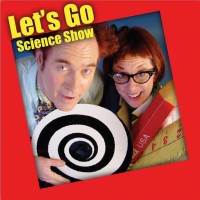 On February 20 at 10:30 a.m., school groups and families can be highly entertained by the Let’s Go Science Show, where the children also learn concepts of science in some pretty amazing ways. More specifically, they can “learn about air pressure, figure out flight, see awesome optical illusions, be shocked by static electricity, see experiments with falling masses, grasp gyroscopic properties and get a handle on the scientific method,” all though memorable demonstrations.
This event has been described as an “educational, entertaining, exciting and experiential extravaganza,” one where Professor Smart and Dr. Knowitall combine their unique talents. Professor Smart demonstrates the principles of physics as he shrinks his own head (seriously!), causes toilet paper to fly, and people’s hair to stand on end, and much more.
 Then, on Saturday, May 9 at 7:30 p.m. and Sunday, May 10th at 3 p.m., you can see a spectacular show with a legendary roster of Grammy® Award winners: Nickelodeon’s The SpongeBob Musical! The New York Times calls this bold and original piece of musical theater “BRILLIANT!” This live performance is the 2018 Best Musical winner of the Drama Desk and Outer Critics Circle Awards, with Time Out New York saying that, during this incredible performance, “Wonders pour from the stage in a ravishing stream of color and invention.”
Daily Beast, meanwhile, dubs this show a “party for the eyes and ears,” with Broadway.com considering it a “creative explosion” and Theatermania calling the show “nothing short of genius.”
We could go on and on about the rave reviews this creative show has received. But, we’ll switch gears to give you an overview of the plot. SpongeBob and all of Bikini Bottom, for that matter, are faced with a dire situation. That is, until a “most unexpected hero rises to take center stage.”